
The Earlier Years
In the earlier years of Filipino art, indigenous traditions played a central role, with works reflecting the culture, spirituality, and daily life of pre-colonial societies. These early forms of art included intricate wood carvings, pottery, and weaving, often used for both practical and ceremonial purposes. With the arrival of Spanish colonizers in the 16th century, Filipino art began to integrate Western religious themes, as seen in early Christian iconography and church architecture. Artists during this time, although heavily influenced by colonial rule, maintained distinct Filipino elements in their work, laying the foundation for a unique artistic heritage that would continue to evolve through the centuries.
Benedicto Cabrera
(1942)
Master of Contemporary Filipino Art
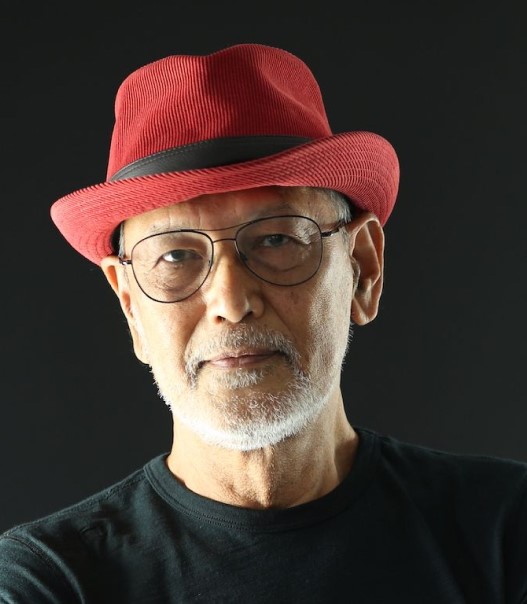
BenCab’s works often explores social issues and the human condition, reflecting the complexities of Filipino society. His style is marked by fluid lines, dynamic forms, and a deep emotional resonance.
BenCab’s prolific work explores social issues, history, and the complexities of Filipino society, particularly the experiences of the marginalized. His most iconic subject is “Sabel,” a destitute madwoman he sketched in the 1960s. Sabel became a powerful, fluid symbol representing the resilience and struggle of the Filipino spirit. His style blends figurative expressionism and abstract design.
After living and working abroad, BenCab successfully integrated global artistic trends with uniquely Filipino themes. His legacy extends beyond his canvases; his presence in Baguio City helped cultivate a thriving artistic community. His influence continues to inspire new generations in social realism and modern abstraction.
Ang Hua Shing
(1931–2005)
Ang Kiukok
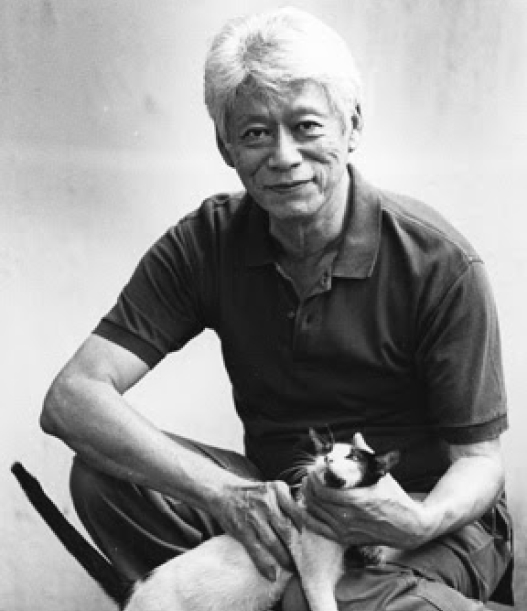
His work is recognized for its harsh lines and vibrant, aggressive colors. Ang Kiukok often painted stark imagery like screaming figures, wild stray dogs, and caged animals, reflecting profound themes of alienation, chaos, and human struggle. This intense focus on social anxiety distinguished his modern work from the more romantic, classical styles of his peers.
Despite the raw, emotional power of his subjects, his compositions maintain a strong sense of geometric order and structural discipline. Ang Kiukok’s contribution was essential in ushering in a new era of Filipino modernism, compelling viewers to confront the deeper, often uncomfortable truths of modern life in the Philippines.
Ang Kiukok’s contribution was essential in ushering in a new era of Filipino modernism, compelling viewers to confront the deeper, often uncomfortable truths of modern life in the Philippines. His powerful and distinctive visual language remains highly influential and a vital part of the nation’s artistic heritage.
Hernando R. Ocampo
(1911–1978)
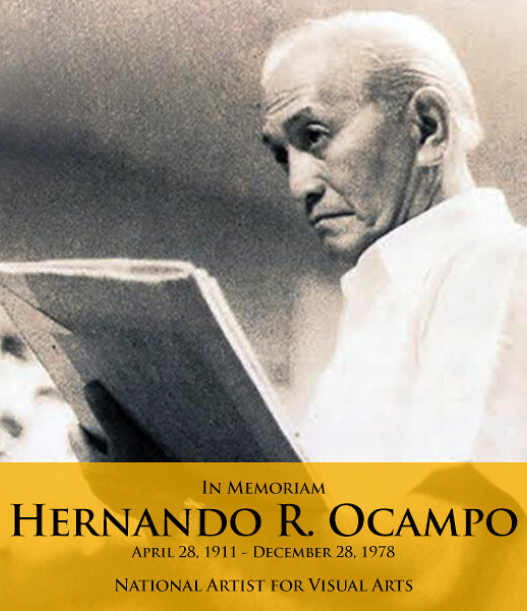
Ocampo’s early paintings were influenced by cubism and expressionism. But later on, he created his own style with bright colors, geometric shapes, and interesting patterns. He was part of a group of Filipino artists who wanted to break away from traditional ways of making art and try new things.
Ocampo’s art focused on social and political themes throughout his career. He wrote stories about urban life, poverty, and injustice, as well as abstract interpretations of Filipino folklore and mythology.
Ocampo is known for his paintings called “Genesis,” which show the story of creation in modern times. These paintings, which have bright colors and pictures that represent things, talk about how people change and grow.
Ocampo won many awards for his art. He won the Republic Cultural Heritage Award in 1965 and the Patnubay ng Sining at Kalinangan Award from Manila in 1970. His art has been shown all over the world and is in famous collections and museums.
Cesar Legaspi
(1917–1994)
The Grand Old Man of Philippine Art
Legaspi’s early works were influenced by social realism, but he later developed his own style of bold colors and geometric shapes. He was a founding member of the “Thirteen Moderns,” a group of Filipino artists who wanted to break away from traditional artistic conventions and explore new ways to express themselves.
Legaspi’s art often focused on social and political themes, reflecting the reality of Filipino life. He painted scenes of urban poverty, injustice, and struggle as well as abstract interpretations of Filipino folklore and mythology.
Legaspi’s most famous work is “Man and Woman,” which shows elongated figures in angular poses, representing the complexities of human relationships and the search for identity in a changing world. His use of bold colors and expressive brushwork make viewers feel tension and unease.
Legaspi’s art earned him many awards and accolades, including the Republic Cultural Heritage Award in 1967 and the Patnubay ng Sining at Kalinangan Award from the City of Manila in 1976. His art has been shown all over the world and is in famous collections and museums.
